
Minimalist Bike Computer for Commuting: Top Picks
Table of Contents
- Quick Comparison: Minimalist Bike Computers for Commuting
- How to Choose a Minimalist Bike Computer for Commuting
- Beeline Velo 2: The Minimalist Bike Computer for Commuting
- Bike Computer vs Smartphone for Commuting: Which Is Better?
- How to Find Bike Friendly Routes for Your Daily Commute
- Mounting Systems and Durability for Daily Commuting
- Theft-Deterrence and Security for Commuter Bike Computers
- Frequently Asked Questions
Last Updated: September 27, 2026
Quick Comparison: Minimalist Bike Computers for Commuting
A minimalist bike computer for commuting is a small, handlebar-mounted device that shows only the navigation and ride data you need on a daily ride, without the training dashboards that make premium units overwhelming. Most commuters do not want to scroll through power zones at a red light, they want a clear turn prompt, a distance readout, and a device that survives a pannier bag.
Quick Picks:
- Best Overall: Beeline Velo 2, compact, app-based navigation with a bright, simple screen at $99
- Best for Minimalists: Beeline Velo 2 with the Stem Cap Mount, near-invisible integration
- Best Budget Add-On: Beeline Velo 2 Carry Case, protects the device off the bike
| Device | Price | Navigation Type | Best For | Standout Feature |
|---|---|---|---|---|
| Beeline Velo 2 | $99.00 | App-based turn-by-turn | Most commuters | Bright, simple interface |
| Velo 2 + Universal Mount | $19.99 (mount included with device) | N/A | Any handlebar | Elastic band grip |
| Velo 2 + Stem Cap Mount | $19.99 | N/A | Clean cockpit setups | Replaces headset top cap |
| Velo 2 Carry Case | $14.99 | N/A | Storage and transport | Padded EVA shell |
How to Choose a Minimalist Bike Computer for Commuting
Ask what you need to see while riding, and what can stay on your phone at home. A commuter computer earns its place on the bars by doing one or two jobs well; a device that tries to do everything makes you pay for features you will never open.

Key Features for Commuters
The features that matter for a daily commute are narrower than a training cyclist's list:
- Speed and distance at a glance, plus an odometer for total miles
- Turn-by-turn navigation that works without stopping to check a screen
- A backlit display that stays readable in low morning light
- Rechargeable battery with enough life for a week of short rides
- Wireless connectivity over Bluetooth to pair with your phone
- A waterproof rating for rain and road spray
GPS vs. Non-GPS Units
GPS units calculate your position and route independently; non-GPS units rely on a wheel sensor for speed and distance only. For commuting, GPS wins because it handles unfamiliar streets and reroutes you when a path is closed.
Beeline Velo 2: The Minimalist Bike Computer for Commuting
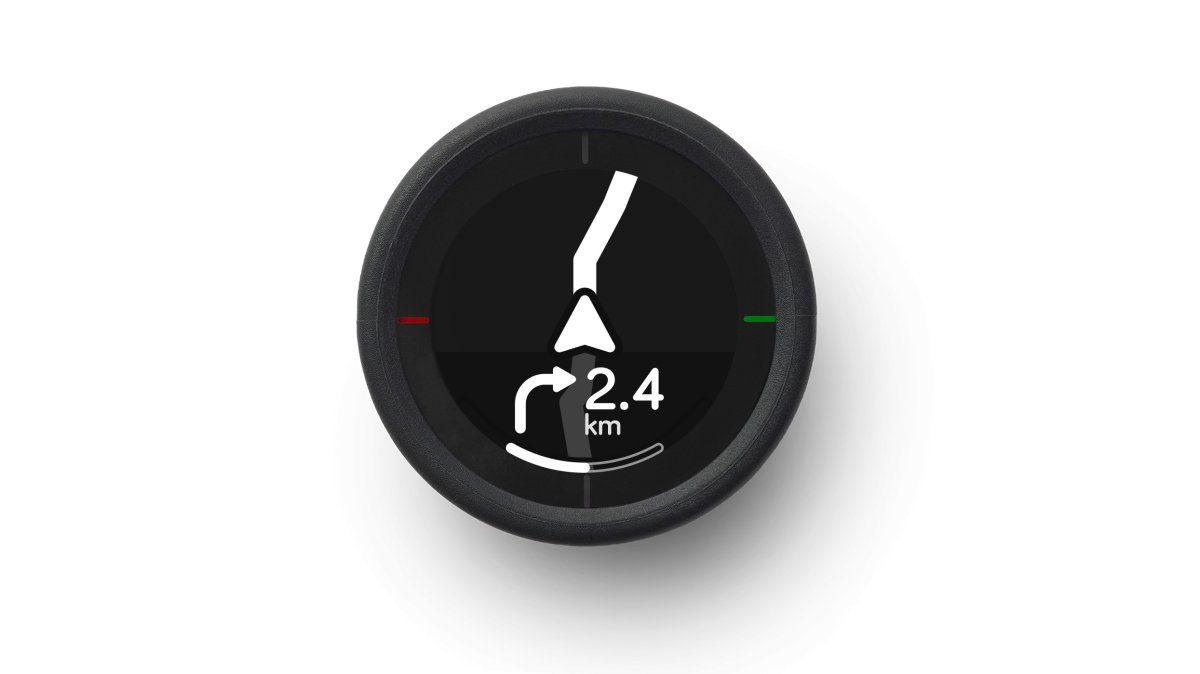
The Beeline Velo 2 is the top pick because it does the commuter's job without the clutter: a compact device, a simple interface, and app-based navigation for $99. It ships with a USB-C cable, universal handlebar mount, and quick start guide, so there is nothing else to buy.

Battery Life and Charging
Battery life is the quiet dealbreaker: a device that dies mid-route leaves you navigating by memory. The Velo 2 charges over USB-C, the same cable most riders already carry for a phone.
Ease of Use and Interface
Setup is where minimalist devices win or lose a commuter for good. The Velo 2 pairs with a companion app, and its interface is built around a bright, simple screen rather than nested menus.
Bike Computer vs Smartphone for Commuting: Which Is Better?
A dedicated bike computer beats a smartphone for commuting when you want to keep your phone safe, save its battery, and avoid glare and rain on the bars. A smartphone wins only if you refuse to carry a second device.
The trade-offs are practical:
- Battery: Navigation drains a phone fast; a dedicated unit preserves phone charge for calls and transit
- Durability: A ruggedized computer handles rain and vibration better than a glass phone
- Focus: A minimalist screen shows one thing well instead of notifications and apps
- Security: A phone on the bars is a visible target; a small computer is less tempting
How to Find Bike Friendly Routes for Your Daily Commute
Finding bike friendly routes starts with tools that prioritize protected lanes and low-traffic streets over the shortest distance. The fastest route by car is rarely the safest by bike.
A practical approach:
- Open a mapping tool and switch to the cycling layer to see designated lanes
- Test the route on a weekend before committing to it on a workday
- Note the shortcuts that connect quiet streets, then verify them in daylight
- Save the route in your companion app so it is ready each morning
- Adjust after a week based on traffic timing and lighting
Mounting Systems and Durability for Daily Commuting
The three mount families you will actually encounter:
- Elastic band / silicone strap mount: wraps around the bar and hooks onto molded tabs. No tools, moves between bikes in seconds, and absorbs vibration. The trade-off is that the band is a wear item, inspect it for cracking and replace it before it stretches out. This is the style included with the Velo 2 Universal Mount, which pairs strong elastic bands with a protective rubber base so the device grips the bar without scratching it.
- Clamp mount: a hinged collar with a bolt that closes around the bar. More rigid than a band and harder to knock out of alignment, but it needs the correct diameter and a hex key to install or move.
- Stem cap mount: replaces the headset top cap, the bolt-on cover at the center of your stem. It gives the cleanest cockpit because nothing wraps the bar, and it is the lowest-profile option when the device is removed. The Velo 2 Stem Cap Mount swaps in for a standard 1 in or 1 1/8 in headset top cap. Check your steerer type first: a star-fitted nut or compression plug must already be in place, and carbon steerers require a compression plug rather than a star nut, so confirm the setup before you pull the original cap.
For storage between rides, the Velo 2 Carry Case is a zipped EVA hard case with a padded interior and carabiner clip, so the device and cable travel together instead of rattling loose in a pannier.

Theft-Deterrence and Security for Commuter Bike Computers
The core distinction is quick-release versus permanent mounting:
- Quick-release mounts let the device twist or slide off in one motion. That is a feature when you are walking into a store and a liability when you forget. The upside is that removal is fast enough to become automatic; the downside is that the same motion works for a thief.
- Permanent or semi-permanent mounts bolt the hardware to the bar or steerer. The mount stays, but the device still detaches, so a permanent mount does not stop theft of the computer itself. What it does is leave less hardware behind and make the remaining bracket less obviously valuable.
- Stem cap mounts are the lowest-profile option: when the device is off, the bike looks like it never had a computer. There is no empty cradle advertising a device worth stealing, which is a real deterrent because most opportunistic theft is triggered by what is visible.
The practical security habits:
- Take it with you, every time. A compact unit slips into a pocket or bag in seconds. This single habit removes most of the risk, because the device is never left unattended.
- Use a carry case. The padded EVA case protects the unit in a bag and keeps the cable with it, so there is no reason to leave it on the bike "just for a minute."
- Choose a low-profile mount. A stem cap mount leaves less hardware behind when the device is removed.
- Park in view. Lock where you can see the bike, not around a blind corner, and prefer racks with foot traffic over empty side streets.
- Photograph your setup. A quick phone photo of the device and its serial number makes a police report or insurance claim far easier if something does walk off.
Because the Velo 2 is small and light, removing it takes a moment, and the stem cap option means the bike shows no sign a computer was ever mounted. Fast removal plus a clean cockpit is the security setup most commuters need.
Frequently Asked Questions
Do I need a GPS bike computer for commuting?
A GPS bike computer helps you navigate city streets without pulling out your phone. For commuting, a minimalist model like the Beeline Velo 2 offers turn-by-turn directions, tracks your ride, and keeps your phone safely stowed. If you stick to the same route daily, a basic speed and distance unit may suffice. But for finding new bike-friendly routes or avoiding traffic, GPS is worth it.
What is the most minimalist bike computer?
The Beeline Velo 2 is a top contender. It has a compact design, a simple interface, and app-based navigation. It shows only essential data like speed, distance, and turn prompts. At $99, it includes a universal handlebar mount and USB-C cable. Its focus on simplicity makes it ideal for commuters who want navigation without complex training features.
Are bike computers worth it for daily commuters?
Yes, if you want reliable navigation, ride tracking, and to keep your phone protected. A minimalist bike computer like the Beeline Velo 2 offers turn-by-turn directions, odometer, and speed without the bulk or cost of premium GPS units. It also saves your phone battery. For commuters who value simplicity and security, it is a practical upgrade.
How do app-based bike computers work?
App-based bike computers like the Beeline Velo 2 pair with your smartphone via Bluetooth. You plan your route in the app, and the device shows turn-by-turn directions on its screen. The phone stays in your pocket or bag, preserving battery. The Velo 2 uses a bright, backlit display, so you can keep your eyes on the road.
Can I use my smartphone as a bike computer?
You can, but it drains battery quickly and exposes your phone to weather and vibration. A dedicated minimalist bike computer like the Beeline Velo 2 keeps your phone safe while giving you navigation, speed, and distance. It also offers better readability in sunlight and a secure mounting bracket. For daily commuting, a separate device is often more reliable and convenient.