
Is Dedicated Bike GPS Worth It? A Real Comparison
Table of Contents
- When Dedicated Bike GPS Actually Saves You Money
- Bike Computer vs. Smartphone: The Real Trade-Offs
- Dedicated Bike GPS Benefits That Matter for Your Riding
- Battery Life, Durability, and Weather Resistance
- Best Bike Computer for Navigation: What to Look For
- GPS Device vs. Phone for Bikepacking and Long Rides
- The Real Cost of Ownership
- Conclusion: Is It Worth It for You?
- Frequently Asked Questions
Last Updated: October 7, 2026
When Dedicated Bike GPS Actually Saves You Money
A dedicated bike GPS isn't just another gadget, it's a decision about how much friction you'll tolerate. Most cyclists assume their smartphone handles navigation fine, but that assumption costs you in battery drain, broken routes, and rides cut short.
The core tension: a dedicated bike GPS costs money upfront, but a smartphone drains battery, forces mid-ride stops to check directions, and ties up your phone when you might need it for emergencies. At Beeline Velo, we've worked with thousands of riders who switched from phone-based navigation and found the simplicity alone justified the investment. The question isn't whether a dedicated bike GPS is useful, it's whether the benefits align with how you ride.

The savings come from three places: phone battery longevity, route reliability, and the mental clarity of one device dedicated to navigation instead of juggling apps. For commuters repeating the same routes, value is marginal. For riders exploring new terrain or doing longer weekend rides, it shifts from nice-to-have to essential.
Bike Computer vs. Smartphone: The Real Trade-Offs
Smartphones are powerful, but they're designed for your pocket, not your handlebars. The trade-offs matter more than most guides admit, and the one nobody covers well is visibility.
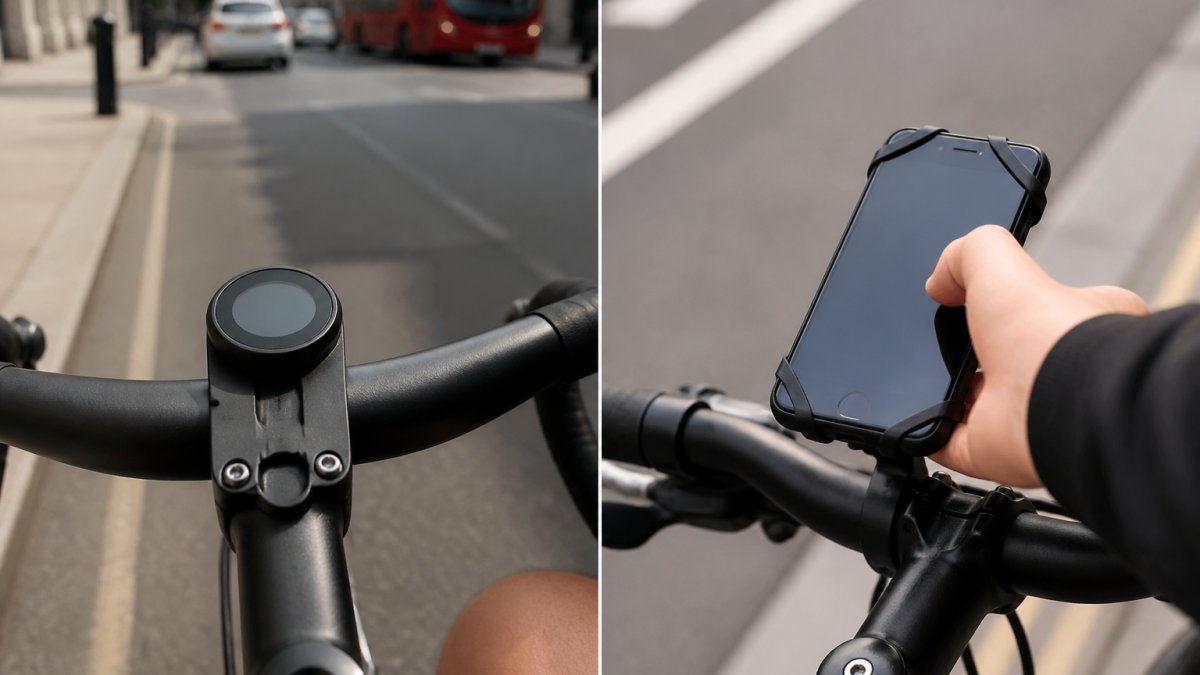
Start with the screen, the trade-off you feel on every ride. A phone screen is emissive, throwing light at your eyes, which fails in direct sun.
Dedicated bike computers solve this with display technology phones don't use. Transflective LCDs and memory-in-pixel displays reflect ambient light instead of fighting it, so they get more readable as the sun brightens and draw almost no power when static.
Battery is the second trade-off, and it's the one that ends rides. A phone running navigation with the screen on drains in a few hours, faster in cold weather or while tracking the ride and holding a signal.
Security and durability follow. Your phone is worth several hundred dollars and mounted in the most exposed position on the bike, threatened by rain, sweat, road grit, and the drop at a stoplight.
Then there's the friction you don't notice until it's gone. A phone on the bars means notifications and the temptation to interact at speed.
The trade-off is real: a dedicated device costs money, is single-purpose, and can't call for help.
Dedicated Bike GPS Benefits That Matter for Your Riding
Not all benefits of a dedicated bike GPS apply equally. The ones that matter depend on your use case.
Turn-by-turn navigation is the headline feature, but the real benefit is what it enables: exploring new routes without fear of getting lost. You can take a different path home from work without memorizing it, or discover new terrain on weekends. That ability to ride confidently into unfamiliar territory separates a dedicated GPS from following a route you already know.
Real-time ride metrics matter more than marketing suggests. A dedicated bike computer tracks cadence, elevation gain, speed, and distance without draining your phone, feeding training load and fitness tracking so you know if you're building endurance or burning out. For recreational riders it's nice-to-have; for anyone tracking progression, it's essential.
Durability and weather resistance aren't glamorous, but they compound. A dedicated GPS is ruggedized for rain, sweat, and temperature swings; your smartphone isn't. If you commute year-round or ride in variable weather, a device built for those conditions outlasts a phone pressed into service.
Offline maps solve a real problem: dropped signal. Urban coverage is spotty; rural routes have none. A dedicated GPS with offline maps doesn't care, navigating the same way with or without signal. Smartphones struggle here because they assume connectivity.
Battery Life, Durability, and Weather Resistance
Battery life is where dedicated GPS devices prove their value most clearly. A good bike computer runs days between charges, some models weeks. Your smartphone runs hours under navigation load, especially with the screen on constantly.
This matters more than it sounds. A dead phone mid-ride is a safety issue: you lose navigation, the ability to call for help, and location sharing with someone tracking your ride. A dedicated GPS eliminates that anxiety because you're not depleting the battery you might need for emergencies.
Durability builds on battery reliability. Bike computers are built for impact, vibration, and weather, waterproof to fully submersible standards. Temperature swings don't degrade them and sweat doesn't corrode the circuitry. A smartphone's durability is a side effect of being a phone, not a cycling design priority.
Mounting systems matter more than you'd expect. A dedicated GPS mounts solidly to your handlebars, doesn't shift under vibration, doesn't block your view of the road, and doesn't require an awkward hand position to see the screen. The handlebar mount included with the Beeline Velo 2 is universal and tool-free, securing the device and keeping both hands free.
Best Bike Computer for Navigation: What to Look For
Choosing the right dedicated bike GPS depends on what you actually use it for. The feature set that matters for a commuter is different from what a weekend tourer needs.
For daily commuting, prioritize simplicity and reliability: turn-by-turn navigation that works consistently, a screen visible in sunlight, and a battery lasting at least a few days. You don't need advanced training metrics or segment tracking, just a device that gets out of your way. The Beeline Velo 2 is built for this, with a compact design, bright screen, simple interface, and a price point that doesn't require justification.
For longer rides and bikepacking, add offline maps and extended battery life. You need navigation without signal and multiple days between charges, plus activity tracking and ride syncing afterward. These features matter more for adventure riding than commuting.
For training and fitness tracking, look for devices that integrate with your other fitness data: cadence sensors, heart rate monitor compatibility, and power meter integration if you're serious about structured training. These are more complex and expensive, but they deliver data that feeds training plans.
Screen visibility in bright sunlight separates good devices from frustrating ones. A transflective or memory-in-pixel display stays readable in full sun without draining battery. Touchscreen convenience doesn't matter if you can't see the screen while riding, and physical buttons work in rain and with gloved hands where touchscreens don't.
GPS Device vs. Phone for Bikepacking and Long Rides
Bikepacking demands a different calculation: days away, limited battery capacity, and terrain that may have no cell signal.
A smartphone fails this test in multiple ways. Battery capacity is limited, so you'd need a power bank, adding weight and bulk. Navigation requires connectivity or pre-downloaded maps that take space and planning. The screen drains faster in cold weather. And if your phone dies, you lose navigation, communication, and emergency capability at once.
A dedicated GPS with offline maps and multi-day battery life handles this by design. You download maps before you leave, the device runs for days on a single charge, and if the battery dies you still have your phone as backup. It's lighter and more compact than a phone mount plus power bank.
The specific advantage for bikepacking is route synchronization. You plan your route at home, sync it to the device, and the GPS guides you turn-by-turn through terrain you've never seen, handling the cognitive load so you stay focused on the ride.
Real-time tracking is another bikepacking advantage: share your location with someone at home so they know you're safe without stopping to send messages, especially valuable for solo riders covering remote terrain.
The Real Cost of Ownership
Price is the obvious cost, but total cost of ownership is where the decision actually gets made. Most guides stop at the sticker price. That's the wrong frame.
Start with the upfront number. Simple navigation computers sit under $100. The Beeline Velo 2 is priced at $99, putting it in the entry tier: you're testing whether the device changes your riding, not making a major financial commitment.
Now the part competitors skip: cost per year of useful life. A dedicated bike GPS is single-purpose with a long service life, and hardware doesn't slow down because a new model shipped.
Compare that to the smartphone you already replace on a cycle.
Ongoing costs are genuinely low. Most devices have no monthly navigation subscription and no data plan. Map updates are typically free for the device's life, though some manufacturers gate premium map layers or live tracking behind a subscription, so read the fine print.
The hidden cost is the learning curve, and it's real. Setup takes an evening: configure the interface, pair sensors, and sync routes from your phone or computer.
Here's the calculation that matters. If your alternative is a new phone every few years plus a power bank on every long ride, the dedicated GPS pays for itself.
Conclusion: Is It Worth It for You?
A dedicated bike GPS is worth it if any of these apply: you're losing navigation because your phone battery dies mid-ride, you're avoiding new routes to dodge getting lost, you're spending mental energy managing your phone instead of enjoying the ride, or you're doing longer trips where offline navigation and extended battery life matter.
It's not worth it if you're riding the same routes repeatedly, your phone's battery lasts through your typical rides, and you're comfortable checking your phone occasionally for directions.
The decision isn't about the device, it's about the friction in your current setup. A dedicated bike GPS removes friction by doing one thing well. At Beeline Velo, we built the Velo 2 for riders who want simplicity without sacrificing navigation capability: compact design, bright screen, and intuitive interface for the commuter and recreational rider who just wants to ride without managing technology.
Frequently Asked Questions
Is a dedicated bike GPS worth it if I already have a smartphone?
It depends on your riding style and priorities. A dedicated bike GPS excels at battery longevity, many last 15-25 hours per charge, versus 4-8 hours on a phone. If you ride long distances, commute daily, or prefer not to drain your phone's battery, a dedicated device pays for itself. For casual neighborhood rides under an hour, your phone is sufficient. The real advantage emerges when you combine long battery life with rugged design, offline maps, and the ability to keep your phone safely stowed.
What's the difference between a bike computer and a GPS device?
A bike computer is a general term for any handlebar-mounted device that tracks metrics like speed, distance, and cadence. A GPS-enabled bike computer adds turn-by-turn navigation, route tracking, and mapping capabilities. Not all bike computers have GPS; some rely on wheel sensors alone. For navigation-focused riders, a GPS-enabled unit is essential. For those who primarily want to log fitness data and don't need directions, a simpler computer may suffice.
Can a smartphone fully replace a dedicated bike GPS?
A smartphone can handle navigation and activity tracking, but it has significant drawbacks for cycling. Battery drain is the biggest issue, navigation apps consume 15-20% battery per hour. Smartphones also lack the ruggedized design of cycling computers; they're vulnerable to rain, vibration, and impact. Screen glare in bright sunlight makes reading directions difficult. For commutes under 30 minutes or casual rides where you don't mind carrying a phone, yes. For long tours, frequent riding, or rough terrain, a dedicated GPS device is more reliable and practical.
What price range should I expect for a decent bike GPS?
Entry-level bike GPS devices start around $99 and offer basic navigation, offline maps, and activity tracking. The Beeline Velo 2 ($99) sits at the affordable end, delivering core navigation and tracking without overwhelming complexity, making it ideal for riders who want simplicity over feature-richness.
Most cyclists underestimate how much their phone drains during navigation, or how often they miss turns because they're not checking the screen. The Beeline Velo 2 eliminates both problems. With its turn-by-turn navigation, activity tracking, and handlebar mount included in the box, you get a complete navigation solution for $99. Discover new routes with confidence and keep your phone safe in your pocket where it belongs.