
Garmin Alternative for Casual Cyclists: 2026 Guide
Table of Contents
- Why Casual Cyclists Are Ditching Premium GPS Units
- Quick Comparison: The Beeline Velo 2 Lineup
- The Best Bike Computer Under 150 for Casual Riders
- Bike Computer vs Smartphone for Cycling: What Actually Works
- How to Choose a Bike Computer Without Overbuying
- What Garmin Owners Actually Miss (and What They Don't)
- Making the Switch: Setup, Mounts, and Daily Use
- Frequently Asked Questions
Last Updated: October 2, 2026
Why Casual Cyclists Are Ditching Premium GPS Units
Most riders never touch 80% of what a premium GPS unit can do. That is the quiet truth behind the growing search for a Garmin alternative for casual cyclists. If your rides are commutes, weekend loops, and the occasional new route, you are paying for training metrics you will never use.
Beeline Velo exists for exactly this rider. Our Velo 2 is a compact, app-based navigation device built around one job: getting you where you want to go without a screen full of numbers competing for attention.

The problem is not that premium units are bad. They are excellent at what they do. The problem is fit.
Quick Comparison: The Beeline Velo 2 Lineup
The Beeline Velo 2 ecosystem is small by design. You buy the device, then add only the mounts and accessories that match how you ride.
| Item | Price | What It Does | Best For |
|---|---|---|---|
| Beeline Velo 2 | $99.00 | Compact navigation device with app-based turn-by-turn directions and activity tracking | Every casual rider's starting point |
| Universal Mount | $19.99 | Elastic-band handlebar mount with silicone base | Riders moving the device between bikes |
| Stem Cap Mount | $19.99 | Replaces your 1 or 1 1/8 inch headset top cap | A cleaner cockpit with nothing on the bars |
| Carry Case | $14.99 | Zipped EVA hard case with padded interior | Storing the device off the bike |
U.S. Consumer Product Safety Commission guidance on bicycle equipment

The Best Bike Computer Under 150 for Casual Riders
The best bike computer under 150 for most casual riders is the Beeline Velo 2 at $99.00. It covers the two things that matter on a real ride: clear turn-by-turn navigation and basic activity tracking, without a training dashboard you did not ask for.
Here is what you get in the box:
- Velo 2 Navigation device
- USB-C charge cable
- Universal handlebar mount
- Quick start guide
Bike Computer vs Smartphone for Cycling: What Actually Works
The honest answer: a phone works, until it does not. Battery drain, glare, rain, and the risk of a handlebar crash all argue against mounting a $900 phone where a $99 device belongs. But before you buy anything, it is worth understanding what a phone-only setup can actually do, because for a lot of casual riders, it is more than they expect.

The zero-cost option most guides skip
If your rides are under an hour and you already carry a phone, you may not need to buy hardware at all. A basic handlebar or stem phone mount runs about $15 to $30, and free or low-cost apps handle the rest:
- Ride with GPS, free tier includes route following and turn-by-turn cues; paid tier adds offline maps.
- Komoot, one free region, then a one-time region unlock or a subscription for global maps.
- Strava, free tier records rides and shows basic stats; the paid tier adds segments and deeper analysis.
- Apple Maps and Google Maps, cycling directions in most metro areas, with voice prompts you can hear through a single earbud.
Where a dedicated device earns its place
A dedicated bike computer wins on three fronts:
- Battery life. Your phone is your emergency contact, payment method, and transit ticket. Spending its battery on navigation is a bad trade. A dedicated unit typically runs for many hours of continuous navigation, so your phone stays charged for the ride home.
- Durability. A device built for handlebars handles vibration and weather. A phone in a cheap mount does not, and phone warranties rarely cover crash damage.
- Focus. A bike computer shows navigation and ride data. A phone shows notifications, which is exactly what you are trying to escape.
The counterargument is real, though. A phone gives you a bigger screen and apps you already own. For a rider who does two short rides a week, that may be enough, and if it is, save the money.
National Highway Traffic Safety Administration guidance on distracted driving
How to Choose a Bike Computer Without Overbuying
Choosing a bike computer comes down to four questions, and none of them involve sensor protocols.
The question nobody asks: what will you do with the data?
Most buying guides assume you want more metrics. The honest truth is that casual riders rarely look at them. A common pattern is that a rider finishes a ride, glances at distance and time, and closes the app. Heart rate zones, cadence, normalized power, and training load sit unread.
- Distance and time, the baseline for almost every casual rider.
- A map of where you went, useful for retracing a good route or sharing it with a friend.
- Elevation gain, helpful if you are training for a charity ride or a hilly commute.
- Average speed, a rough fitness signal over weeks, not a training metric.
A simpler way to think about post-ride data
Ask yourself what you would do differently if a number changed. If the answer is "nothing," you do not need that number. A casual rider who sees a low average speed on a windy day does not need a training plan, they need to know the ride still counted.
What Garmin Owners Actually Miss (and What They Don't)
Riders who switch from a premium unit to a simpler device rarely miss the data fields. They miss two things: the confidence of a familiar interface and the feeling that they got full value from a device they already own.
- Scrolling through menus mid-ride to find the right screen
- Charging a device after every other ride
- Sensor pairing that fails at the worst moment
- A cockpit that looks like a cockpit
Making the Switch: Setup, Mounts, and Daily Use
Setup takes minutes, not an afternoon. The Velo 2 ships with the Universal Mount and a quick start guide, so your first ride can happen the day it arrives.
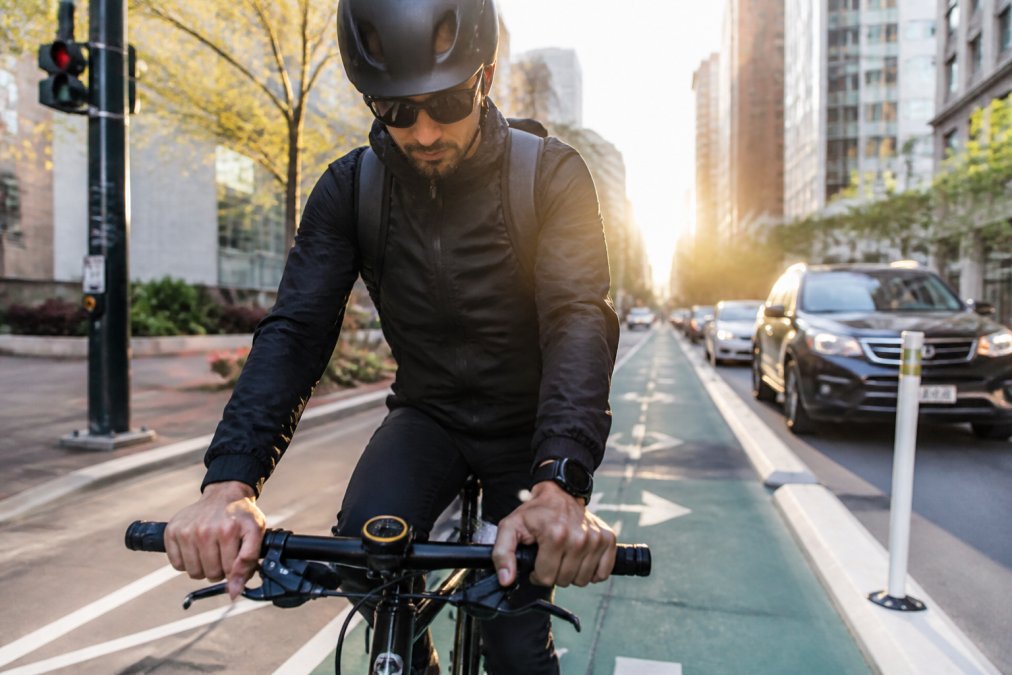
Mount options, and when to pick each:
- Universal Mount ($19.99, included with Velo 2): Elastic bands and a silicone base grip your handlebars. Best if you move the device between bikes.
- Stem Cap Mount ($19.99): Replaces your 1 or 1 1/8 inch headset top cap. Best for a permanent, low-profile setup.
- Carry Case ($14.99): EVA hard shell with padded interior. Best for commuters who park outside or travel with the device.
Federal Trade Commission guidance on product claims and endorsements
Frequently Asked Questions
Do casual cyclists really need a dedicated GPS bike computer?
Not always. If you ride the same routes and only want distance and speed, a phone app covers it. A dedicated device earns its place when you want turn-by-turn directions without draining your phone battery or stopping to check a screen. The Beeline Velo 2 costs $99, runs its own navigation, and keeps your phone stowed. Riders who explore new routes weekly get the most from it; riders on one fixed commute may not.
Is a smartphone app a better alternative to a bike computer for casual riders?
A phone works until it doesn't. Navigation, screen brightness, and GPS all pull power, so long rides can leave you with a dead battery and no way to call for a lift. Mounting a phone also exposes it to vibration and rain. The Beeline Velo 2 splits the difference: the app handles route planning and syncing, while a compact handlebar device handles directions, so your phone stays charged and protected in a pocket.
What features should a casual cyclist look for in a bike computer?
Four things matter most: clear turn-by-turn directions, a screen you can read in daylight, battery life that covers your longest ride, and a mount that fits your handlebars. Everything else, including power meter compatibility, cadence sensors, and training metrics, serves riders chasing performance goals. The Beeline Velo 2 ships with a universal handlebar mount, a USB-C cable, and a quick start guide, so there is nothing extra to buy before your first ride.
How does the Beeline Velo 2 compare to traditional premium GPS units?
Premium units pack training metrics, sensor pairing, and detailed ride analysis. Casual riders rarely open those menus. The Beeline Velo 2 takes the opposite approach: a small, bright screen, a simple interface, and app-based route planning for $99. It tracks your activity and guides you turn by turn, which covers what most commuters and weekend tourers actually use. If you race or train to a plan, a premium unit still makes sense.
Are smartwatches a viable alternative to bike computers for casual riding?
Smartwatches handle fitness tracking well, and wrist-based heart rate is convenient. The problem is the glance. Checking directions on a watch means lifting your arm off the bars, which is awkward in traffic. A handlebar-mounted device like the Beeline Velo 2 sits in your line of sight, so you read the next turn without changing your position. Many riders use both: a watch for heart rate and a bar-mounted unit for navigation.
The real challenge with cycling tech is not finding more features. It is finding a device you will still be using in six months. Beeline Velo built the Velo 2 for riders who want turn-by-turn navigation, activity tracking, and a bright, simple screen without a premium price tag. It ships with the Universal Mount and a USB-C cable, and the full setup costs $99.00. Get started with Beeline Velo and keep your focus on the ride.