
How to Navigate City Bike Commutes: 2026 Guide
Table of Contents
- Before You Ride: What You'll Need for City Bike Commutes
- How to Find Bike Friendly Routes
- Best Bike Navigation Apps for Commuters
- Urban Cycling Safety Tips for Traffic and Intersections
- Weather Preparation and Visibility Gear
- Cargo, Hygiene, and Mental Health on City Bike Commutes
- Common Mistakes to Avoid on Your First Commutes
- Conclusion: Building Your Commuting Routine
- Frequently Asked Questions
Last Updated: September 16, 2026
Before You Ride: What You'll Need for City Bike Commutes
Learning how to navigate city bike commutes starts with the right setup, not the right route. This guide from Beeline Velo covers the gear, habits, and planning that make daily urban cycling predictable instead of stressful. A common mistake is buying a fast bike before figuring out how you'll carry a laptop, where you'll lock up, and how you'll handle a flat tire at 7 a.m. Fix those first, and the riding takes care of itself.

The payoff is real: commuters who ride regularly tend to report lower stress and better focus at work, a pattern documented in public health guidance from the CDC's physical activity guidance.
Essential Gear and Accessories
You need less than you think, but the few items you do need are non-negotiable: a properly fitting helmet, front and rear lights, a U-lock, and a fix-a-flat kit. Add a small multi-tool, a spare tube, and a compact pump.
Visibility gear matters most in low light.
Bike Maintenance Basics
Two checks prevent most roadside breakdowns: tire pressure and chain lubrication. Pump tires to the sidewall pressure before each ride, and wipe and re-lube the chain every week or two in wet weather.
| Check | Frequency | Time Needed |
|---|---|---|
| Tire pressure | Every ride | 1 minute |
| Chain lubrication | Weekly | 5 minutes |
| Brake and cable inspection | Monthly | 10 minutes |
| Professional tune-up | 1-2x yearly | Shop visit |
How to Find Bike Friendly Routes
The best route to work is rarely the shortest one. It's the one with protected infrastructure, calm side streets, and predictable crossings. Google Maps and city bike maps offer cycling layers, but neither knows your comfort level with traffic.
Planning Your Route
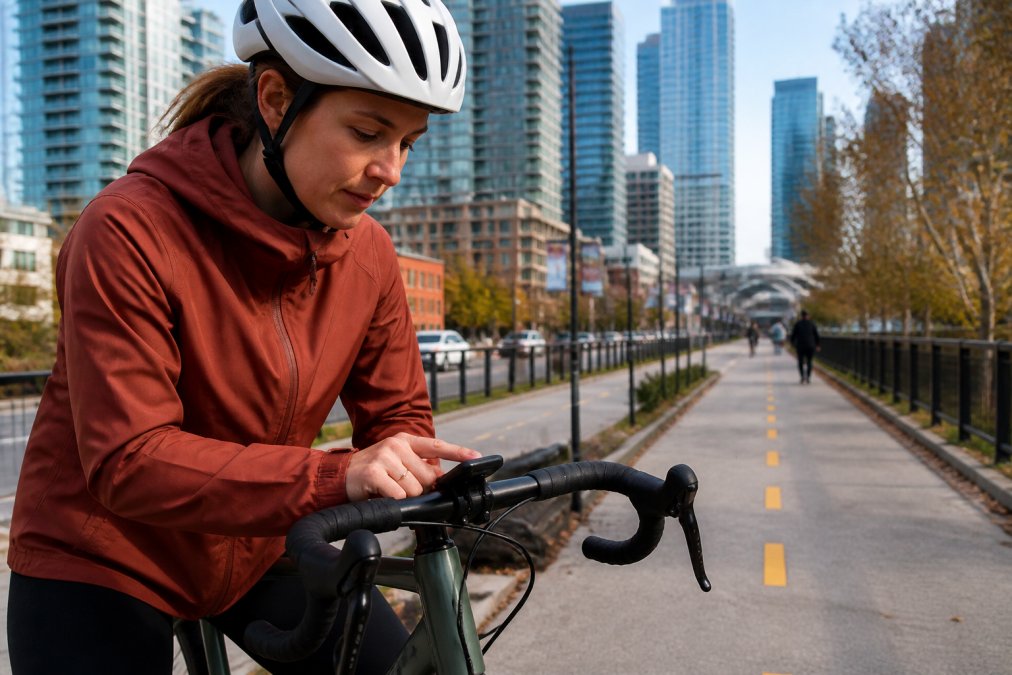
Start by mapping a low-traffic version of your trip, even if it adds a few minutes. Multi-use paths and separated bike lanes reduce the mental load of riding in the city.
Intermodal Commuting: Bikes and Transit
Combining a bike with transit solves the distance problem that stops most people from commuting by bike at all: ride to a station, bring the bike aboard or lock it there, and finish the last mile on two wheels. This cuts total trip time and keeps you off the most dangerous segments, typically the fast arterials near your destination.
- Bikes allowed at all hours on many light rail and commuter rail systems, often with a limit of two bikes per car and a requirement to use designated areas.
- Peak-hour restrictions on some heavy rail and bus systems, where bikes are barred during the busiest windows (typically weekday mornings and late afternoons).
- Folding bikes treated differently. Because a folded bike reads as luggage rather than a vehicle, many agencies permit them at all hours, including on buses with limited rack space.
- Bus racks. Most urban bus fleets carry front-mounted racks that hold two or three bikes on a first-come basis. Practice loading once when the bus isn't crowded, the driver will usually wait, but not during rush hour.
Best Bike Navigation Apps for Commuters
The best bike navigation apps for commuters do three things well: route you on bike-friendly streets, give clear turn-by-turn directions, and survive a dead phone battery. Most phone apps cover the first two. Very few handle the third.
Urban Cycling Safety Tips for Traffic and Intersections
Urban cycling safety tips come down to one principle: be predictable. Drivers respond well to riders who hold a line, signal early, and behave like traffic. Defensive riding means assuming you haven't been seen, especially at driveways and cross streets.
Handling Intersections
Intersections cause the majority of urban bike crashes. Approach every one with a plan: position yourself in the lane, make eye contact with drivers, and never pass a turning truck on its right side.
Traffic Laws and Road Etiquette
In most states, cyclists have the same rights and duties as drivers. That means obeying traffic signals, riding with the flow of traffic, and yielding to pedestrians. The NHTSA bicycle safety guidance outlines the core rules that apply in nearly every jurisdiction.
Weather Preparation and Visibility Gear
Weather-appropriate gear turns a fair-weather rider into a year-round commuter. Fenders keep road spray off your clothes, a breathable rain shell handles showers, and gloves extend your season into cold mornings.
Cargo, Hygiene, and Mental Health on City Bike Commutes
The logistics of urban life decide whether commuting sticks. Carrying a load comfortably, arriving presentable, and finishing less stressed than you started turn a trial week into a habit. Most guides stop at 'wear a backpack', these three problems are where new commuters quit.
Cargo and Load Management
Where the weight sits matters more than how much you carry. A backpack puts the load high and behind your center of gravity, raising sweat, straining your lower back, and shifting your balance in turns. Moving the same weight onto the bike lowers your center of gravity and lets your back breathe.
Match the carrier to the load:
- Rear rack plus one pannier handles a laptop, lunch, shoes, and a change of clothes. One pannier on one side is fine for moderate loads; add a second only when you need the volume, and balance the weight side to side.
- Handlebar bag for phone, wallet, keys, and a snack, accessible without stopping, and light enough not to affect steering.
- Frame bag for tools, tube, and pump, keeping the weight centered and low.
- Front rack or basket for groceries and bulky items, but keep the load modest; heavy front weight makes steering feel vague.
Post-Commute Hygiene and Stress Reduction
Arriving presentable is a solved problem if you plan for it: reduce sweat before the ride, manage it after, and have a change of clothes waiting.
Before the ride:
- Leave five to ten minutes earlier and ride at a conversational pace. Most sweat comes from effort, not distance.
- Dress one layer lighter than the temperature suggests; you'll warm up within the first few minutes.
- Use a breathable, moisture-wicking base layer instead of cotton, which holds sweat against your skin.
After the ride:
- A small kit, wipes, deodorant, a fresh shirt, and a microfiber towel, handles most of it in a restroom stall.
- If your building has a shower or a private wellness room, use it; a quick rinse resets everything.
- Hang damp riding clothes to dry rather than sealing them in a bag, which keeps odor from setting in.
- Keep a spare set of clothes at the office so a soaked commute doesn't derail your day.
Common Mistakes to Avoid on Your First Commutes
Most first-commute problems trace back to a handful of avoidable errors: riding the car route, skipping the flat kit, overloading a backpack, and ignoring weather.
- Choosing the fastest road instead of the calmest one
- Leaving without a spare tube or pump
- Wearing a heavy backpack instead of using panniers
- Riding without lights in low light
- Skipping the route test ride before committing
Conclusion: Building Your Commuting Routine
The hardest part of city bike commutes isn't the riding. It's building a routine that survives rain, deadlines, and the occasional flat tire. Start with one or two days a week, lock in a route you trust, and let the habit grow.
Frequently Asked Questions
How do I find the safest bike routes in my area?
Start with local bike maps and apps that highlight protected infrastructure and low-traffic streets. Use a navigation tool that routes you on actual bike-friendly paths rather than any street. Test your route on a weekend before commuting, noting bike lanes, traffic signals, and road hazards. Many cities also publish bike-friendly route maps online.
What gear is essential for daily urban bike commuting?
You need a helmet, bike lights, a U-lock, and a fix-a-flat kit. High-visibility clothing helps in low light, and weather-appropriate gear keeps you comfortable. For navigation, a compact device like the Beeline Velo 2 ($99) mounts on your handlebars and provides turn-by-turn directions without pulling out your phone. Panniers or a backpack handle cargo.
Is a 30-minute bike ride a long commute?
A 30-minute bike ride is a moderate commute for most urban cyclists. At a typical pace of 12-15 mph, that covers 6-7.5 miles. Many commuters ride 20-45 minutes each way. If you're new to commuting, start with 2-3 days per week and build up. The key is finding a bike-friendly route that matches your comfort level.
How can I stay visible to traffic while commuting by bike?
Use front and rear bike lights, even during daylight. Wear high-visibility clothing or a reflective vest. Position yourself in the lane where drivers expect to see you, not in blind spots. Make eye contact with drivers at intersections. Use hand signals for turns. Predictable riding is safer than sudden movements, so signal early and hold your line.
Always check your state and local traffic laws, as bicycle regulations vary by jurisdiction.